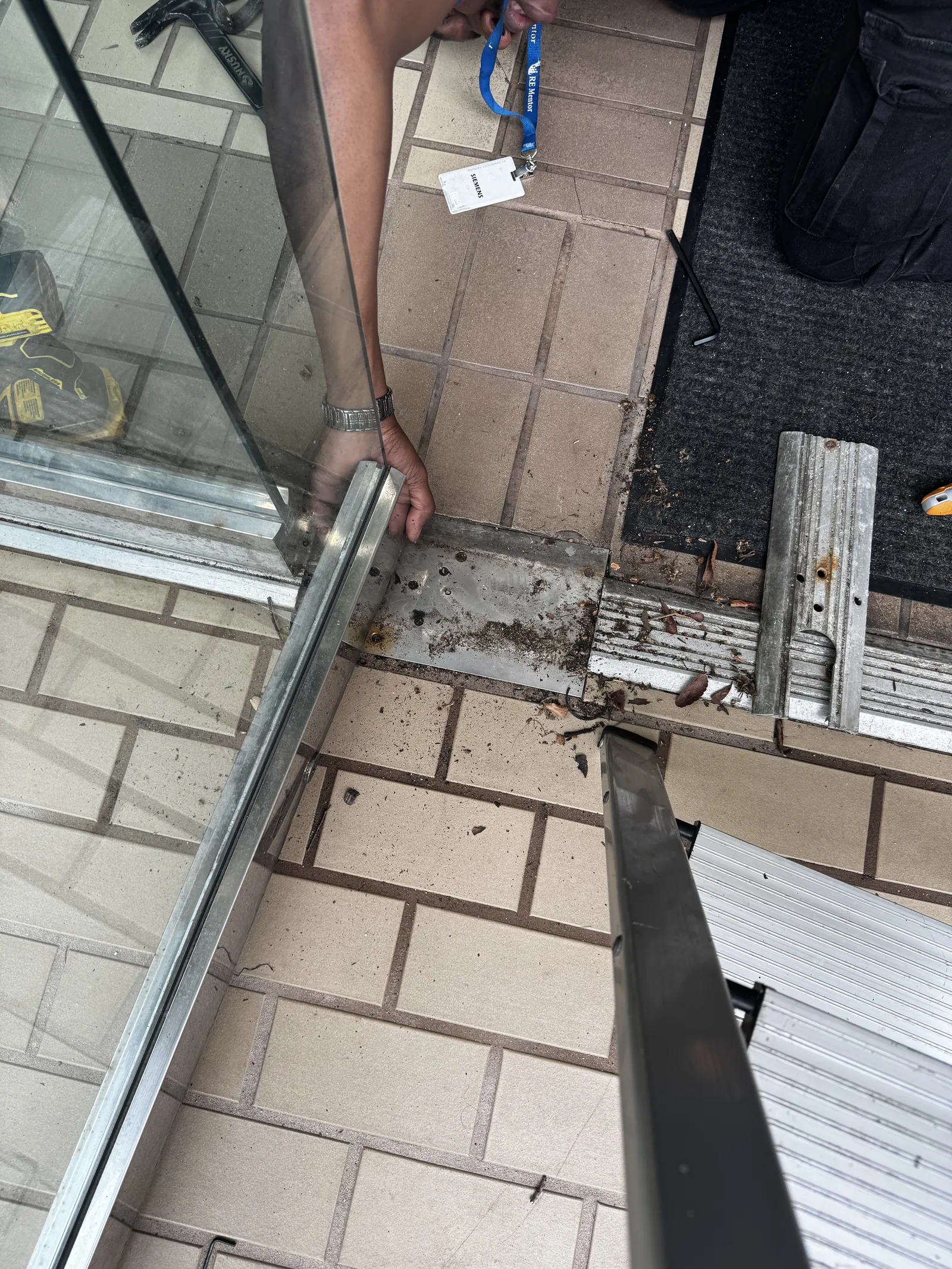
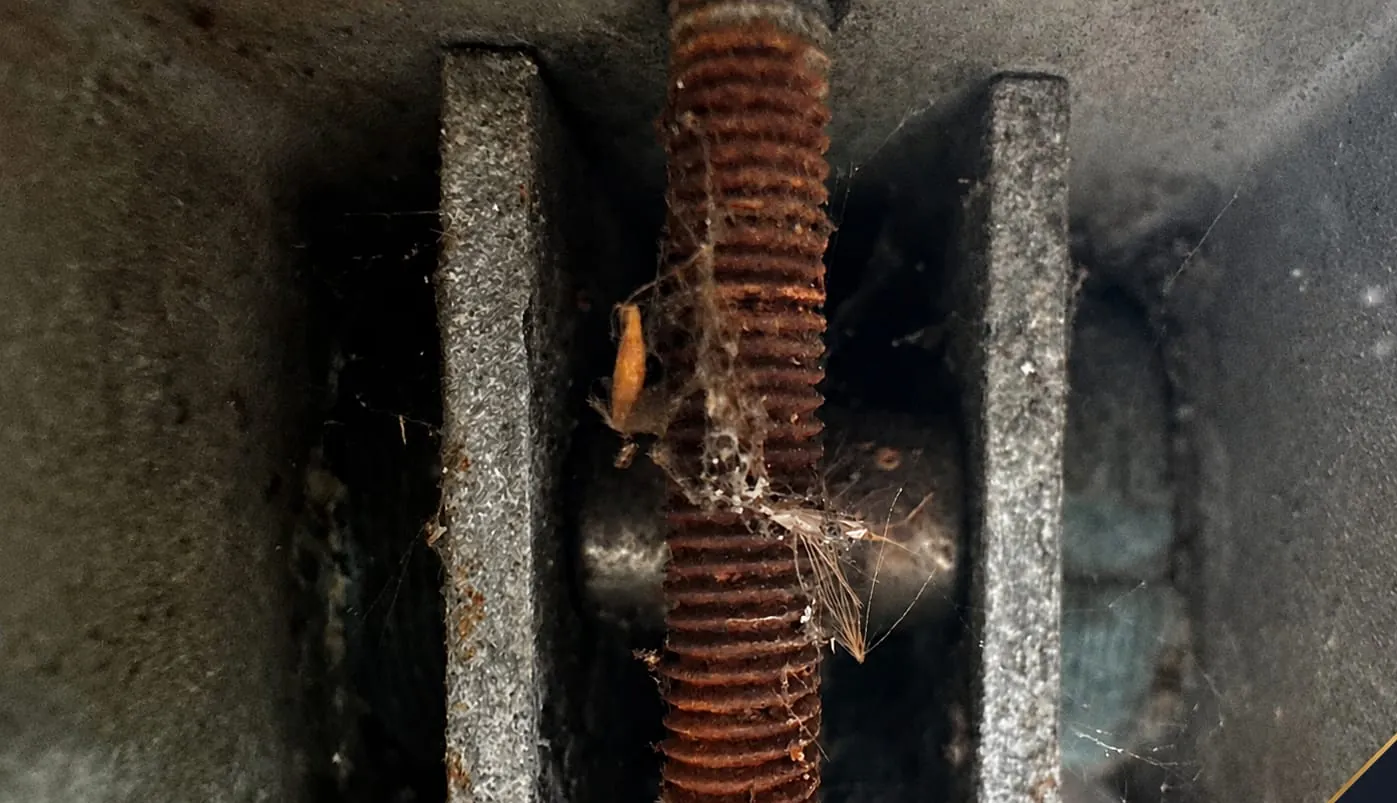
The bolt in the photograph at the top of this article came out of a sliding door's bottom rail on a coastal job, and it is the most honest picture we own. It was not abused. It was not defective. It lived in salt air, in the bottom of a door where splash water and humid air settle, and chemistry did the rest — the same chemistry currently working on the hardware of every sliding door within a few miles of the Florida coast. Coastal corrosion is not a defect or a surprise; it is the environment, operating on a schedule. The good news is that it is also the most predictable and manageable enemy your sliding door has.
Where sliding door corrosion starts
At the bottom, always. The sill and track sit in the splash zone — rain, pool water, irrigation overspray, and the salt film that the sea breeze deposits on everything. The bottom rail of the panel lives there too, and inside it, the roller assemblies: steel bearings in steel housings, working in exactly the wettest, saltiest few inches of the entire door. Rollers corrode first and worst, which is why coastal doors get hard to open years before inland doors do. Locks and keepers follow — a mortise lock is a small steel machine, and its springs and case corrode until the throw gets lazy. Track rails pit: aluminum does not rust, but salt pits it, and a pitted rail is sandpaper that consumes rollers. By the time a coastal door feels truly bad, the failure is usually a committee: rollers, rail and lock all diminished at once.
What stainless actually buys you
Materials are the long-term answer, and the honest version is specific. Stainless steel roller assemblies — housing, bearing races and wheel or a stainless wheel on a sealed bearing — are the single highest-value upgrade on a coastal slider; they remove the corrosion clock from the part that fails first. Stainless or properly coated lock hardware extends the same logic to the lock. For the track, a stainless steel cap over a pitted rail restores a smooth, corrosion-proof running surface without replacing the frame. None of this makes a door immortal. It changes the replacement interval from 'every few years, angrily' to 'once, properly' — and on a beachfront or canal-front home, the math is not close.
The rinse rhythm that works
Between specifications, maintenance doubles what you get from any hardware. Salt corrodes while it sits wet on metal; removing the film resets the clock. The rhythm is the one boat owners already know: rinse the track, sill and the bottom of the panel with fresh water every month or two — a hose, two minutes, no heroics. Keep the track's drainage weeps clear so rinse water and storm water leave instead of standing. Vacuum grit before it grinds. And treat the first orange bloom on any screw or bracket as a cavity — a wire brush and a touch-up in spring, or a seized assembly in two years. Our coastal tune-ups are built around exactly this list, because catching corrosion at the bloom stage is the entire game.
When to stop patching
There is an honest end point, and coastal doors reach it more often than inland ones: a bottom rail rotted through around the roller pockets, a sill corroded to lace, a frame whose geometry has gone with its metal. At that point each repair is renting time from a structure that is leaving, and a properly specified replacement — with corrosion-resistant hardware chosen for the address, not the catalog — is the cheaper decade. We will show you the hardware and the numbers both ways, in writing. Salt air is not negotiable; it is simply physics with a view. Specify for it, rinse on rhythm, and a sliding door on the Florida coast will glide the way it should for as long as you own the house.
Door questions in Florida?
Talk to the crew: (855) 640-0404 — or find your city on the Florida page.